Out of Sight, Out of Mind: The High Price of Planning's Public Invisibility
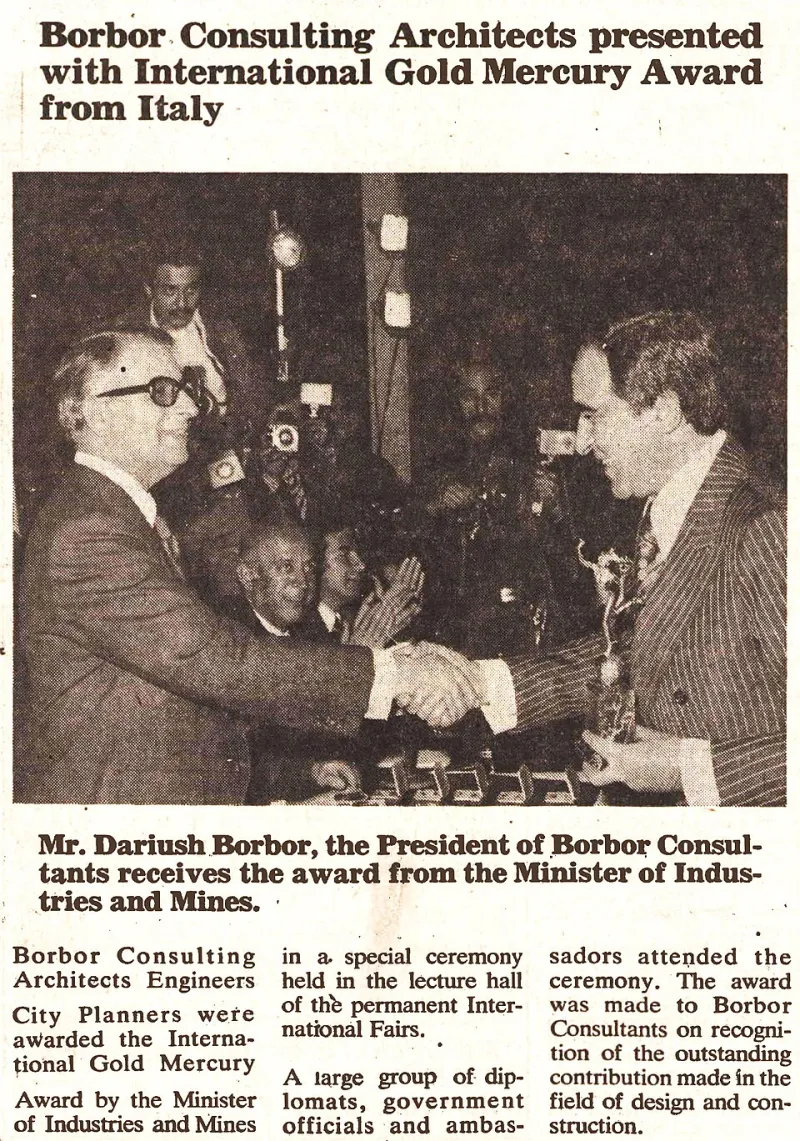
Photo: Dariushborbor, CC BY 4.0, via Wikimedia Commons
Ask a random commuter stuck in traffic on a congested arterial road who designed the conditions making their drive miserable, and the answers will vary wildly—the mayor, the governor, the highway department, perhaps some nameless bureaucracy. Rarely, if ever, will the answer be: urban planners. And yet, in a very meaningful sense, that is precisely where the answer belongs.
This is the central paradox confronting the planning profession in the United States today. Planners shape the physical and policy frameworks that govern where Americans live, how they move, where their children attend school, and whether their neighborhoods feel safe or neglected. Yet the profession itself remains largely invisible to the public it serves. That invisibility carries consequences far more serious than wounded professional pride.
A Profession Hidden in Plain Sight
Architects enjoy cultural cachet. Civil engineers are associated, however loosely, with bridges and tunnels. Even zoning—a technical subset of planning practice—has recently broken into mainstream conversation, thanks largely to the national housing shortage forcing itself onto political agendas. But urban planning as a coherent discipline, with its own methods, ethics, and professional standards, remains opaque to most residents.
This is not entirely accidental. Planning has historically operated in the background of civic life, embedded within municipal bureaucracies and expressed through documents—comprehensive plans, environmental impact reports, transportation studies—that few residents read and fewer still understand. The profession's culture has often prized technical rigor over public communication, treating outreach as a compliance obligation rather than a strategic imperative.
The result is a significant perception gap. Decisions that will shape a neighborhood for decades are made in processes that feel remote, procedural, and inaccessible. When residents do engage, it is frequently in opposition—at a zoning hearing, fighting a proposed development—rather than in the generative, forward-looking conversations that good planning actually requires.
What Invisibility Actually Costs
The costs of this disconnect are not abstract. They show up in budget cycles, in election results, and in the erosion of institutional capacity that planning departments need to function effectively.
When elected officials face pressure to cut municipal budgets, planning departments are perennially vulnerable. Unlike police, fire, or public works, planning does not have a natural constituency of residents who feel its absence immediately and viscerally. The long time horizons that define good planning practice—comprehensive plans that project twenty or thirty years into the future—work against the profession in a political environment dominated by two- and four-year electoral cycles. Without a public that understands and values what planners do, those departments become easy targets for reduction.
The consequences extend further. Infrastructure investments made without coherent planning frameworks tend to generate induced demand, sprawl, and fiscal stress rather than the resilience and efficiency that strategic planning is designed to produce. Communities that underinvest in planning capacity pay for it downstream, in deferred maintenance costs, inequitable development patterns, and missed opportunities to shape growth before it shapes them.
Perhaps most insidiously, invisibility feeds cynicism. When residents cannot see the logic connecting planning decisions to outcomes in their daily lives, they fill that vacuum with suspicion. Accusations of corruption, favoritism, or indifference to community needs become harder to rebut when the planning process itself is poorly understood. Trust, once lost, is extraordinarily difficult to rebuild.
The Storytelling Deficit
Planners are, by training, analysts. They are skilled at synthesizing data, modeling scenarios, and producing technically defensible recommendations. What many planning programs have been slower to cultivate is the capacity to translate that work into narratives that resonate with non-specialists.
This is not a trivial gap. The ability to connect a land-use decision to a tangible outcome—explaining, for instance, how a mixed-use rezoning near a transit corridor will reduce vehicle miles traveled, lower household transportation costs, and generate tax revenue that funds parks and schools—is a form of professional communication that the planning field must treat as a core competency, not an optional add-on.
Some practitioners and departments are beginning to do this well. Cities like Minneapolis and Austin have found ways to bring comprehensive plan updates into public conversation through accessible language, visual storytelling, and genuine dialogue rather than pro forma public hearings. Community engagement specialists embedded within planning departments are reframing outreach as a two-way exchange rather than a notification exercise. These are promising signals, but they remain exceptions rather than norms.
Professional organizations, academic programs, and individual practitioners all have a role to play in closing the storytelling deficit. That means investing in plain-language communication skills alongside technical training, developing case studies that demonstrate planning's tangible impact in terms residents can recognize, and actively seeking media opportunities to make the profession's work visible.
Building a Constituency for Strategic Thinking
The deeper challenge is structural. In a political culture that rewards immediate, visible results, planning's greatest value—its capacity to prevent problems before they become crises, to coordinate investments for long-term efficiency, to protect community character while accommodating growth—is precisely the kind of value that is hardest to claim credit for.
You cannot hold a ribbon-cutting for a traffic fatality that never happened because a street was designed well twenty years ago. You cannot easily quantify the neighborhood stability that a carefully crafted affordable housing policy preserved over a decade. Prevention and coherence are difficult to dramatize.
And yet, this is exactly the case planners must learn to make—consistently, accessibly, and in the forums where public opinion forms. That means showing up at neighborhood association meetings not just when a contentious project is on the agenda, but routinely, to explain what planning work is underway and why it matters. It means cultivating relationships with local journalists who cover city hall, providing the context and data that help reporters tell planning stories accurately. It means engaging social media and digital platforms where residents increasingly form their understanding of civic issues.
None of this is glamorous. Much of it falls outside the traditional boundaries of what planners consider their professional responsibility. But the alternative—allowing the profession to remain invisible until something goes wrong—is a strategy that has demonstrably failed.
The Network Imperative
Building public visibility for planning is not work any single practitioner or department can accomplish alone. It requires a coordinated effort across the profession—shared messaging frameworks, documented success stories, and a commitment to collective advocacy that elevates planning's role in public discourse.
This is precisely the kind of collaborative infrastructure that professional networks exist to provide. When planners share communication strategies across jurisdictions, when they celebrate and publicize each other's public engagement successes, when they develop common language for explaining their work's value to non-specialists, they build something more durable than any individual department's reputation. They build a profession that the public can see, understand, and choose to support.
American cities face extraordinary challenges in the decades ahead—climate adaptation, housing scarcity, aging infrastructure, demographic transformation. Meeting those challenges will require sustained, strategic planning capacity at every level of government. That capacity will not be funded, staffed, or protected unless the public understands what it is for.
Planners must become their own best advocates. The first step is simply becoming visible.