Shared Stakes: Why Architects and Planners Must Build a Common Language to Solve the Housing Crisis
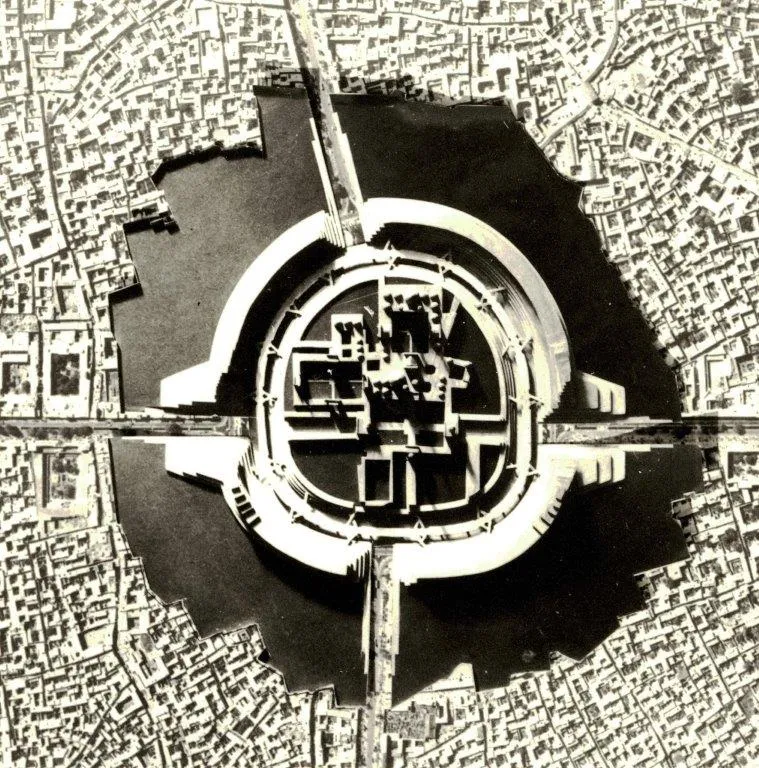
Photo: Dariushborbor, CC BY 4.0, via Wikimedia Commons
The numbers are unambiguous. The United States is short somewhere between four and seven million housing units, depending on the methodology used to calculate the deficit. Rents in major metropolitan areas have risen faster than wages for more than a decade. Homelessness has increased in cities where the economy is ostensibly thriving. And yet, two of the professional communities with the greatest capacity to respond — urban planners and architects — continue to operate in largely separate orbits, each bringing formidable expertise to the problem while rarely combining it in ways that produce transformative results.
This is not a polite observation. It is a structural critique, and it demands a direct response from both professions.
The Silo Problem Is Real, and It Has Consequences
Urban planners operate primarily within regulatory and policy frameworks. They write zoning codes, develop comprehensive plans, negotiate with developers, and manage community engagement processes. Their work shapes the conditions under which housing can be built — lot sizes, height limits, setback requirements, parking minimums, permitted uses. Planners determine, in effect, what is possible.
Architects, meanwhile, work within those conditions to design the buildings themselves. They translate programmatic requirements and site constraints into built form, navigating building codes, client priorities, and aesthetic considerations. Their work determines, in effect, what is built.
When these two functions operate in isolation — when planners set regulatory parameters without deep engagement with the design implications, and architects respond to those parameters without meaningful input into shaping them — the results are predictable. Codes that inadvertently foreclose innovative building typologies. Design solutions that cannot be replicated at scale because the regulatory environment has not been reformed to accommodate them. Affordable housing that meets technical requirements but fails to serve residents with dignity or functionality.
The gap between what planners permit and what architects can achieve is where affordable housing solutions go to die.
What Siloed Practice Looks Like in Practice
Consider the widespread regulatory barrier of minimum parking requirements. For decades, planning codes across the United States mandated that new residential developments include a specified number of parking spaces per unit — often one or two, regardless of the building's proximity to transit. Architects designing affordable housing projects consistently identified these requirements as a primary cost driver, adding tens of thousands of dollars per unit in construction expense.
The solution — eliminating or reducing parking minimums near transit — was well understood by planners. The cost impact on building design was well understood by architects. And yet, in city after city, reform was delayed for years because there was no sustained, institutionalized channel through which architects could communicate design-cost realities directly into planning policy processes. The knowledge existed in both professions. The mechanism for translating it into policy reform was absent.
Buffalo, New York, which adopted a new unified development ordinance in 2017, offers a contrasting example. The city engaged architects, developers, and planners in an extended collaborative process to draft new form-based codes that prioritized building design quality and contextual fit over use segregation. The result was a regulatory framework that architects could work within creatively rather than around strategically.
Successful Models of Cross-Disciplinary Partnership
Several cities and professional organizations have developed models of architect-planner collaboration that deserve wider attention and adaptation.
Austin's Design Commission and Planning Integration
Austin, Texas — a city grappling with one of the most acute affordability crises in the nation — has formalized the relationship between its Design Commission, composed largely of architects and design professionals, and its Planning Commission. The two bodies now hold joint work sessions on major policy initiatives, including the city's ongoing land development code revision. While the process has been contentious, the institutional architecture for cross-disciplinary input has produced more design-literate planning proposals than previous reform efforts.
The Enterprise Community Partners Collaborative Model
Enterprise Community Partners, a national nonprofit affordable housing organization, has pioneered a model in which architects are embedded within planning and community development processes from the earliest stages of neighborhood revitalization efforts. Rather than being engaged after regulatory frameworks are established, design professionals participate in shaping the policy conditions that will govern subsequent development. This approach has produced several award-winning affordable housing developments in cities including Denver, Seattle, and Newark.
AIA-APA Joint Initiatives
At the national level, the American Institute of Architects and the American Planning Association have periodically collaborated on research and advocacy initiatives addressing housing, climate resilience, and urban design. These partnerships, while valuable, have not yet produced the kind of sustained, institutionalized collaboration that the scale of the housing crisis demands. There is a strong argument that both organizations should formalize a joint working group focused specifically on regulatory barriers to affordable housing design — one with genuine decision-making authority rather than advisory status alone.
The Case for Shared Accountability
The most important cultural shift required is not organizational but attitudinal. Both professions must accept a degree of shared accountability for housing outcomes that neither has traditionally embraced.
Planners have sometimes treated affordable housing as a policy target to be achieved through density bonuses, inclusionary requirements, and funding allocations — necessary tools, but insufficient without attention to whether the resulting buildings actually work for residents. Architects have sometimes retreated into the position that their professional responsibility ends at the building envelope, that the regulatory and policy failures producing the housing crisis are not their concern.
Neither posture is adequate to the moment.
When a housing development is approved but unbuildable at affordable price points because of code requirements that were never stress-tested against real construction economics, that is a shared failure. When a building is designed without regard for how its massing, materials, or unit mix interact with neighborhood character and community needs, that is a shared failure. The housing crisis is not a planning problem or an architecture problem. It is a built environment problem, and it demands built environment professionals who are willing to be accountable for the full system.
A Call to the Planning Network Community
Professional networks like this one exist precisely to build the connective tissue that siloed institutional structures cannot. The relationships formed through shared professional communities — across disciplines, across municipal boundaries, across career stages — are the informal infrastructure through which new collaborative models emerge and spread.
The Planning Network community includes urban planners, architects, transportation engineers, housing policy specialists, and community development practitioners. The knowledge required to solve the housing crisis is distributed across that membership. What is needed now is the intentional creation of spaces — forums, working groups, joint research initiatives, mentorship programs — where that knowledge can be combined rather than merely accumulated in parallel.
The housing crisis will not be solved by any single profession acting alone. It will be solved by professionals who have built enough trust, shared enough language, and developed enough mutual respect to hold each other accountable for outcomes that neither could achieve independently. That work begins with the networks we choose to build and the collaborations we choose to sustain.