Winning Formula, Wrong City: How Planners Can Stop Selling Yesterday's Success
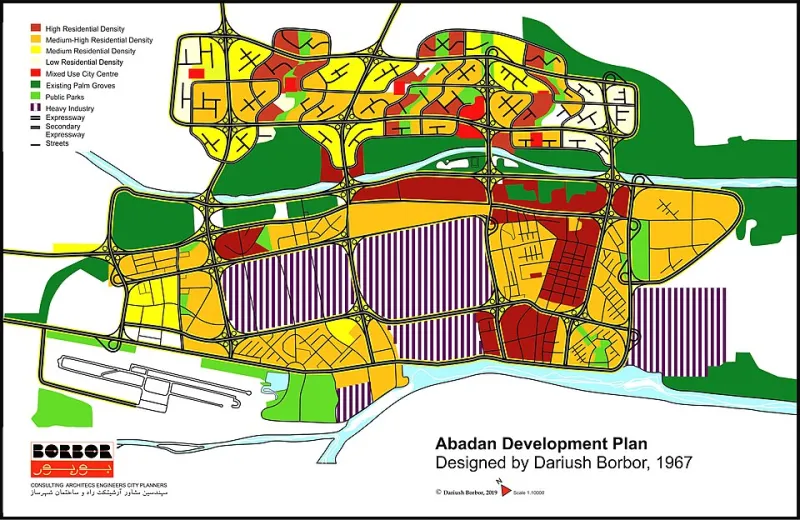
Photo: Dariushborbor, CC BY-SA 4.0, via Wikimedia Commons
The Reputation That Travels—and the Context That Doesn't
American planning departments hire for achievement. Resumes circulate with bullet points that read like civic trophy cases: a downtown revitalization here, a transit corridor there, a comprehensive plan adopted on time and under budget somewhere else. Search committees are drawn to this kind of evidence. It is legible, it is defensible, and it gives elected officials something concrete to point to when explaining a hire.
What rarely travels alongside those achievements is the ecosystem that made them possible—the political alignment, the community relationships, the economic conditions, the decades of local history that shaped what residents were ready to accept. Strip away that context, and a winning formula can become a liability almost immediately.
This is the planner's paradox: the very success that makes a professional attractive to a new city is often the thing that makes them least effective once they arrive.
How the Profession Inadvertently Rewards the Wrong Things
The networking culture of urban planning, for all its genuine value, has developed a subtle bias toward mobility. Professionals who have held positions in multiple markets are frequently perceived as more sophisticated, more adaptable, and more credentialed than those who have spent a decade or more in a single community. Conference circuits reinforce this perception. Panel rosters at national convenings tend to feature practitioners from large markets or those who have moved frequently, implicitly signaling that breadth of geography equals depth of expertise.
Job postings compound the problem. Position descriptions often list familiarity with specific tools, planning frameworks, or project types without asking how a candidate navigated failure, recalibrated strategy under political pressure, or rebuilt trust after a controversial decision. The emphasis falls on what someone has done rather than how they think when a familiar approach stops working.
None of this is conspiratorial. It is simply the natural result of a profession that has not yet developed robust shared language for evaluating adaptive capacity—the ability to read a new environment accurately and revise one's assumptions before they harden into mistakes.
The Transplant Problem in Practice
Consider the pattern that plays out with some regularity across mid-size American cities. A planning director arrives from a coastal metro where mixed-use density was both politically viable and market-supported. They bring genuine expertise. They also bring an unexamined confidence that what worked in one context will translate cleanly to another.
In the new city, land values are different. The development community has different risk tolerances. Neighborhood associations carry different historical grievances. The city council operates under different pressures. Within eighteen months, the strategies that generated acclaim in the previous role are generating resistance in the current one—not because the planner lacks skill, but because they underestimated how much of their prior success was situational rather than transferable.
The professional harm is real. So is the civic harm. Projects stall. Relationships fray. Institutional credibility, which takes years to build, erodes quickly when a department appears to be applying someone else's playbook to a city that never asked for it.
Building Frameworks That Don't Oversell Solutions
The answer is not for accomplished planners to stop moving, nor for cities to stop seeking outside perspective. External practitioners bring genuine value precisely because they have seen how other communities have approached similar challenges. The problem arises when process gets compressed—when the listening phase is treated as a formality rather than a genuine investment.
Planners who navigate new environments successfully tend to share a common discipline: they separate their diagnostic tools from their prescribed solutions. They carry portable frameworks for understanding a city—questions to ask, stakeholders to map, historical tensions to surface—without assuming they already know what the answers will be.
This distinction matters enormously. A planner who arrives in a new city asking how this community's relationship to density has evolved over the past twenty years is in a fundamentally different posture than one who arrives already confident that density is the answer. The former is using experience as a lens. The latter is using it as a conclusion.
Practical portable frameworks tend to include structured stakeholder listening in the first ninety days, deliberate engagement with the informal power structures that do not appear on any organizational chart, and explicit acknowledgment to community members that previous experience informs but does not determine the approach. That last element is not merely diplomatic. It is strategically essential. Communities can tell when they are being listened to and when they are being managed toward a predetermined outcome.
What Hiring Committees Should Actually Be Evaluating
Cities bear responsibility here too. Search processes that prioritize resume pedigree over demonstrated adaptive capacity will continue to produce mismatches regardless of how talented the candidates are.
Hiring committees would benefit from reorienting interview questions around failure and recalibration rather than achievement. What has a candidate done when their initial read of a community turned out to be wrong? How have they adjusted strategy in response to political shifts they did not anticipate? What have they learned from a project that did not deliver what they expected?
These questions are more revealing than any list of completed initiatives because they surface how a professional thinks when conditions change—which, in urban planning, is always.
Reference checks should similarly probe adaptive behavior. Former colleagues and council members are often willing to describe how a candidate handled adversity if asked directly. That information is frequently more predictive of future performance than the headline accomplishments that dominate most recommendation conversations.
Some cities have begun incorporating structured scenario exercises into senior planning searches, presenting candidates with real or composite community challenges and evaluating how they frame the problem before proposing solutions. This approach is not without its own limitations, but it shifts the evaluation toward process and judgment rather than credential accumulation.
Toward a More Honest Professional Culture
The planning profession would benefit from a more candid conversation about what actually transfers when a practitioner moves from one city to another. Professional networks, including the peer communities that organizations like Planning Network exist to support, are well-positioned to host that conversation.
This means creating space for practitioners to discuss not only their successes but the assumptions those successes rested on—and where those assumptions have failed them in new contexts. It means normalizing a kind of professional humility that the current recognition culture does not always reward.
It also means acknowledging that deep contextual expertise has value that the profession has historically underpriced. A planner who has spent fifteen years in a single mid-size city, navigating its particular political terrain and community history, possesses a form of knowledge that a highly mobile generalist simply cannot replicate. Finding ways to recognize and retain that expertise—rather than treating longevity as a sign of limited ambition—is one of the more important cultural adjustments the field could make.
The planner's paradox is not inevitable. It is a product of institutional habits that can be examined and changed. The first step is simply being honest about what a track record actually proves—and what it does not.