Credit Without Ceremony: How Planners Can Document Invisible Influence Before It Disappears
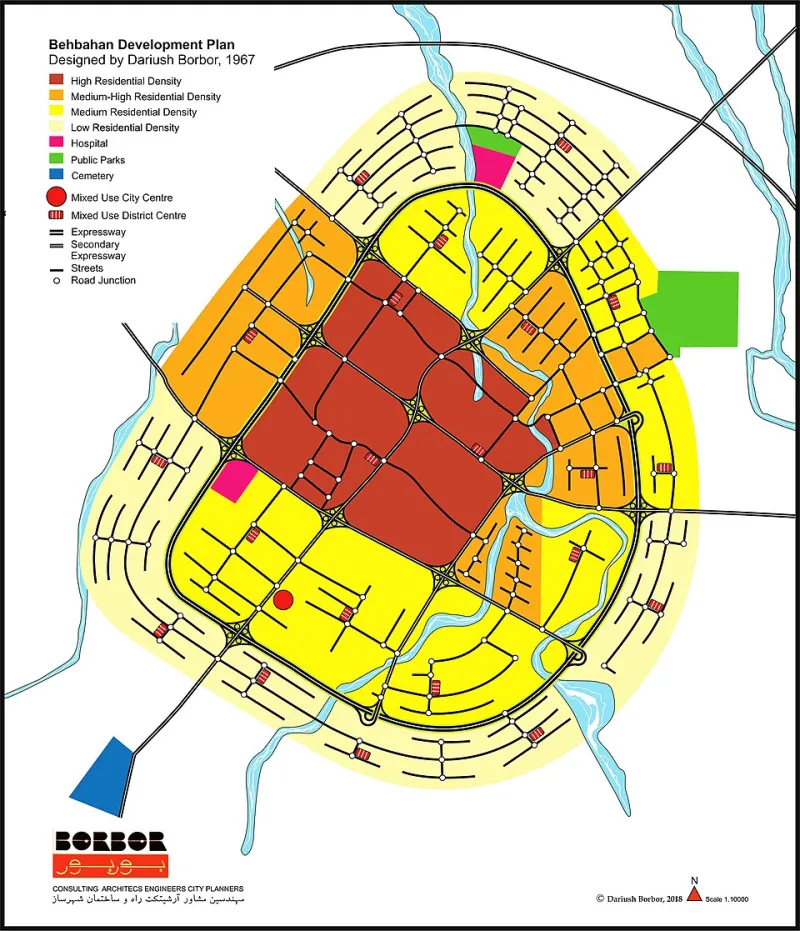
Photo: Dariushborbor, CC BY-SA 4.0, via Wikimedia Commons
On any given Tuesday, a mid-level planner in a city like Columbus, Richmond, or Albuquerque might spend the morning steering a developer away from a site configuration that would have blocked a future transit corridor, the afternoon coordinating with a public works department on utility easements that will quietly determine street widths for the next forty years, and the evening preparing a briefing that shapes a councilmember's position on a rezoning request she will later take full credit for. By Wednesday, none of that work exists anywhere on record. The city moves forward. The planner moves on to the next task.
This is not an unusual day. It is, for many planning professionals, a representative one.
The structural invisibility of planning's most effective functions has been discussed informally within the profession for decades. What has received less attention is the compounding institutional damage that invisibility produces—not just to individual careers, but to the long-term authority and credibility of planning departments as a whole. When elected officials cannot identify what planners actually contributed to a successful outcome, budget negotiations become harder. When community members associate planning only with contentious public hearings, trust erodes. When institutional memory walks out the door with a retiring director, departments lose decades of strategic context overnight.
The answer is not self-promotion. It is systematic documentation—and a professional culture that treats capturing influence as a core responsibility rather than an afterthought.
The Asymmetry of Visible and Invisible Work
Planning operates across two distinct registers that rarely receive equal attention. The first is visible: public hearings, approved developments, adopted comprehensive plans, ribbon cuttings. These events generate records, photographs, press releases, and political credit. They are legible to the public and to elected officials precisely because they were designed to be.
The second register is invisible: the informal coordination calls, the technical guidance offered before a formal application is ever filed, the long-range projections that quietly inform a capital improvement budget, the interagency negotiations that prevent a transportation project from undermining a watershed protection ordinance. This work is often more consequential than the visible kind—and almost entirely undocumented.
The asymmetry matters because institutions, including city councils, budget offices, and the public, make judgments about value based on what they can see. A planning department that appears to produce reports and attend hearings will be evaluated accordingly. A department whose staff has been quietly preventing costly mistakes and building the conditions for long-term growth has no comparable evidence to present when the annual budget conversation arrives.
Why Planners Underinvest in Documentation
Several forces push against systematic documentation of informal influence. Professional culture within planning tends to emphasize service over visibility. Many practitioners entered the field precisely because they are more comfortable shaping outcomes than claiming credit for them. There is also a legitimate concern about damaging the collaborative relationships that make behind-the-scenes work effective in the first place: a developer who receives candid technical guidance informally may become defensive if that guidance is later cited in a formal record.
Workload is another factor. In understaffed departments—a condition that describes most American planning agencies today—documentation can feel like a luxury that competes directly with delivery. When the choice is between writing up a coordination meeting and attending the next one, the latter almost always wins.
Finally, there is a structural problem with how planning departments measure their own output. Most performance metrics track visible activities: permits processed, applications reviewed, plans adopted. The informal guidance that shapes an application before it is filed, or the strategic advice that prevents a problematic project from advancing at all, generates no data point in any system.
Building a Documentation Practice That Survives Turnover
The goal is not to create a bureaucratic paper trail for its own sake. It is to build an institutional record that makes the department's full contribution legible—to leadership, to elected officials, to successor staff, and, where appropriate, to the public.
Several practical approaches have emerged from departments that have begun taking this seriously.
Structured coordination logs. Rather than relying on email chains that may never be organized or retained, some departments have introduced brief standardized forms for significant informal consultations. These are not formal correspondence—they are internal records noting the nature of the guidance offered, the parties involved, and the likely downstream effect on a project or policy. Over time, they become a searchable archive of the department's advisory role.
Outcome attribution frameworks. When a development comes in substantially better designed than a comparable project from five years ago, planners rarely ask why. Departments that have introduced simple outcome attribution processes—connecting specific early-stage guidance to later project characteristics—begin to accumulate evidence of their own effectiveness. This evidence is invaluable during budget cycles and strategic planning conversations.
Pre-application summary memos. Several planning directors have begun requiring brief internal memos summarizing significant pre-application meetings. These serve dual purposes: they create a record of informal guidance and they ensure that knowledge is shared across the department rather than held by one staff member.
Transition documentation protocols. The retirement wave moving through American planning departments right now is not a future problem—it is a present one. Departments that have not built systematic knowledge transfer protocols are losing irreplaceable institutional context every time a senior planner leaves. Structured exit documentation, combined with ongoing internal knowledge-sharing practices, is the most direct available response.
Communicating Impact Without Claiming Credit
Documentation creates the raw material. Communication determines whether it changes anything.
The most effective approach tends to be indirect: rather than asserting credit, planners present patterns. A department that can show elected officials a time-series comparison of project outcomes before and after the introduction of a pre-application consultation program is making a credible case for its value without requiring anyone to take its word for it. A director who can walk a budget committee through three specific examples of costly mistakes that early-stage planning guidance prevented is demonstrating influence through evidence rather than assertion.
This approach also serves the profession's collaborative interests. Claiming credit for specific outcomes can damage the working relationships with developers, engineers, and other municipal departments that make informal influence possible. Demonstrating systemic value—here is what the department contributes as a function, not as a collection of individuals—preserves those relationships while still making the case that matters institutionally.
The Institutional Memory Imperative
There is a version of this argument that is purely strategic: planning departments should document their invisible work because it will help them in budget negotiations and political conversations. That version is true and worth making.
But there is a deeper argument as well. American cities are navigating conditions—climate adaptation, housing scarcity, aging infrastructure, demographic transformation—that require sustained, expert, long-horizon thinking. That kind of thinking cannot be rebuilt from scratch every time a planning director retires or a department undergoes reorganization. It depends on institutional memory: accumulated knowledge of what was tried, what worked, what the constraints were, and why certain decisions were made.
Documenting invisible influence is not, at its core, about credit. It is about continuity. The cities that will navigate the next twenty years most effectively will be the ones whose planning departments treated knowledge retention as a professional obligation rather than an administrative chore. The work that happens in rooms nobody knows about deserves a record—not for the sake of the planners who did it, but for the sake of the cities that will need to build on it.