Measuring for Whom: How Planning Departments Are Redesigning Success Metrics Around Community Outcomes
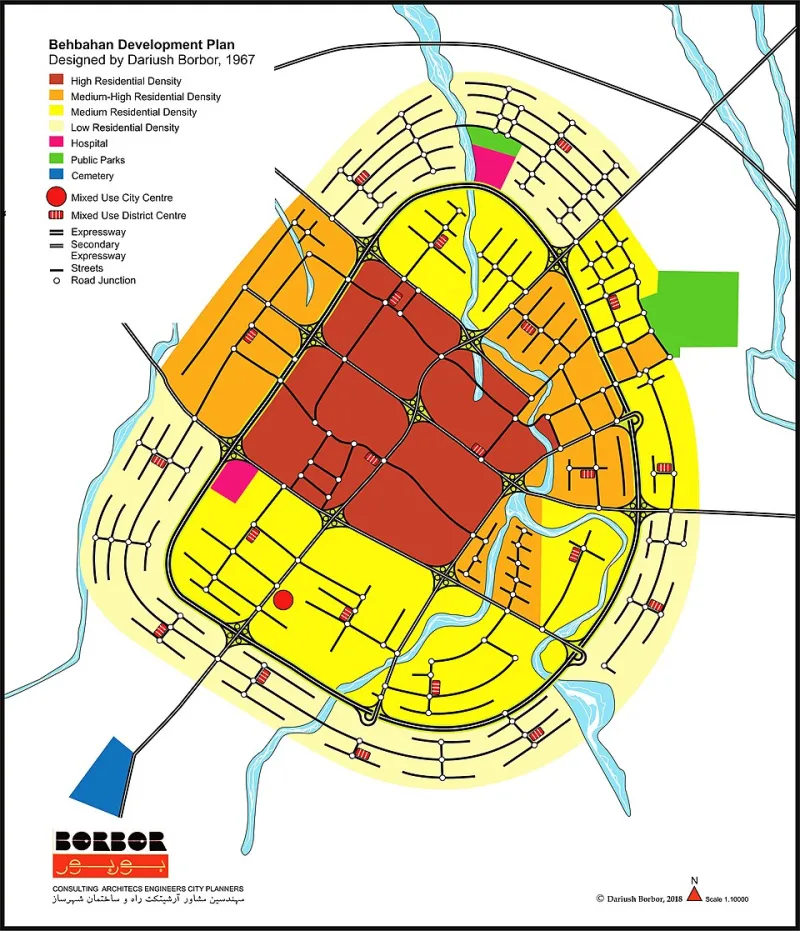
Photo: Dariushborbor, CC BY-SA 4.0, via Wikimedia Commons
The Gap Between Output and Outcome
For decades, planning departments across the United States have measured their own effectiveness through a familiar set of indicators: housing permits issued, transit ridership figures, square footage of commercial space approved, and infrastructure miles completed. These numbers are concrete, defensible, and relatively easy to compile. They also share a significant limitation — they describe what was built, not what happened to the people who already lived there.
The distinction matters enormously. A neighborhood that adds five hundred new housing units and a new light rail station may register as a success on every conventional metric while simultaneously pricing out the families who had lived within walking distance of that station for two generations. The data never captures their departure. It records no failure because, in the traditional accounting of planning outcomes, their displacement is simply invisible.
This is the equity blind spot that a growing coalition of planning professionals is working to close — not by discarding existing metrics, but by building a second layer of accountability that asks a harder question: beneficial development for whom?
Why Conventional Metrics Persist
Understanding why equity-centered measurement has been slow to take hold requires acknowledging the structural pressures planning departments operate under. Elected officials and development stakeholders typically want data that reflects activity and investment — numbers that signal momentum and justify expenditure. Housing units, tax base expansion, and infrastructure throughput are legible to city councils, bond rating agencies, and the press in ways that resident stability indices or community wealth trajectories are not.
Planning directors also operate under resource constraints that make sophisticated longitudinal data collection difficult. Tracking whether existing residents benefit from development over time requires sustained data infrastructure — linking building permit records to rent burden surveys, cross-referencing census tract population changes with eviction filing rates, and maintaining relationships with community organizations capable of capturing ground-level experience. These are not trivial investments, and many departments lack the staffing or analytical capacity to pursue them without dedicated support.
There is also a professional culture dimension. Many planners are trained to measure process fidelity — was the environmental review completed correctly, did the public hearing meet statutory requirements, was the zoning amendment legally sound — rather than distributional outcomes. Shifting toward community-centered accountability requires not just new data systems but a recalibration of what the profession considers evidence of good work.
Cities Piloting a Different Approach
Despite these obstacles, several American cities have moved meaningfully toward equity-integrated measurement frameworks, and their experiences offer instructive models for the broader profession.
Portland, Oregon's Bureau of Planning and Sustainability has incorporated an anti-displacement dashboard into its development review process, tracking rent burden changes, eviction rates, and demographic shifts at the neighborhood level as a complement to standard permit and investment data. The dashboard was developed in partnership with community development organizations and draws on both administrative data and resident surveys, providing planners with a richer picture of neighborhood change than permit counts alone could supply.
In Richmond, California, the planning department worked with local nonprofits and the University of California system to develop a community wealth index that tracks homeownership rates, small business formation, and wage levels in neighborhoods undergoing significant development pressure. Rather than treating these indicators as separate from planning work, Richmond has embedded them into its general plan implementation reporting, making them part of the official record of how the city is performing against its stated goals.
Chicago's Department of Planning and Development has piloted a displacement risk scoring model that flags census tracts showing early warning signs — rising rents combined with stagnant incomes, increasing code enforcement activity, declining household tenure duration — and routes additional resources and community engagement to those areas before displacement accelerates. The model is explicitly predictive rather than retrospective, an important evolution from frameworks that only document harm after it has occurred.
Building the Accountability Architecture
Professionals seeking to adapt these approaches to their own contexts should consider several foundational elements that the most effective equity metric frameworks share.
First, community co-design is not optional. Metrics developed by planning staff in isolation tend to reflect institutional priorities rather than resident experience. The cities making the most progress have invested significant time in working with neighborhood organizations, tenant advocates, and local researchers to identify the indicators that matter most to people most exposed to development pressure. This process is slower, but it produces frameworks that are both more accurate and more politically durable.
Second, data disaggregation is essential. Citywide averages routinely obscure the concentrated impacts that fall on lower-income residents and communities of color. Effective equity metrics operate at the census tract or neighborhood level and are disaggregated by race, income, and tenure status. Without this granularity, it is impossible to determine whether broad development gains are reaching the populations that planning policy is ostensibly designed to serve.
Third, displacement-prevention indicators must be prospective. Measuring displacement after it has occurred is professionally insufficient — by the time a neighborhood shows clear signs of population displacement, the policy window for prevention has typically closed. Early warning systems that track leading indicators, such as rent-to-income ratio trajectories, speculative property acquisition patterns, and changes in affordable housing stock, give planners and elected officials the information they need to intervene while intervention remains viable.
Finally, equity metrics must carry institutional weight. Pilot dashboards that exist outside formal reporting structures tend to fade when leadership changes or budget pressures mount. The most durable frameworks are those embedded in general plan implementation reports, departmental performance reviews, and, where possible, budget justification processes. When equity outcomes are part of the official record of how a department is performing, they are considerably harder to marginalize.
A Profession's Responsibility to Its Own Standards
The American Institute of Certified Planners' code of ethics places an explicit obligation on practitioners to give priority to the long-range consequences of present actions and to pay special attention to the interrelatedness of decisions. Measuring only what gets built, while remaining blind to whether those investments serve existing communities, is difficult to reconcile with that standard.
The cities piloting equity-centered accountability frameworks are not doing so because it is easy. They are doing so because the profession's credibility depends on being able to demonstrate that public planning serves the public — including, and perhaps especially, the portions of the public least positioned to advocate for themselves in formal processes.
For planning departments that have not yet begun this work, the barrier is rarely philosophical. Most practitioners understand the equity argument. The barrier is practical: where to start, how to build the data infrastructure, how to engage communities authentically, and how to present unfamiliar metrics to skeptical elected officials. The growing body of case study experience from Portland, Richmond, Chicago, and other pioneering cities is making that practical guidance more accessible than it has ever been.
The profession now has fewer excuses not to measure what actually matters.