The Participation Problem: Rethinking How Planners Hear—and Reach—the Communities They Serve
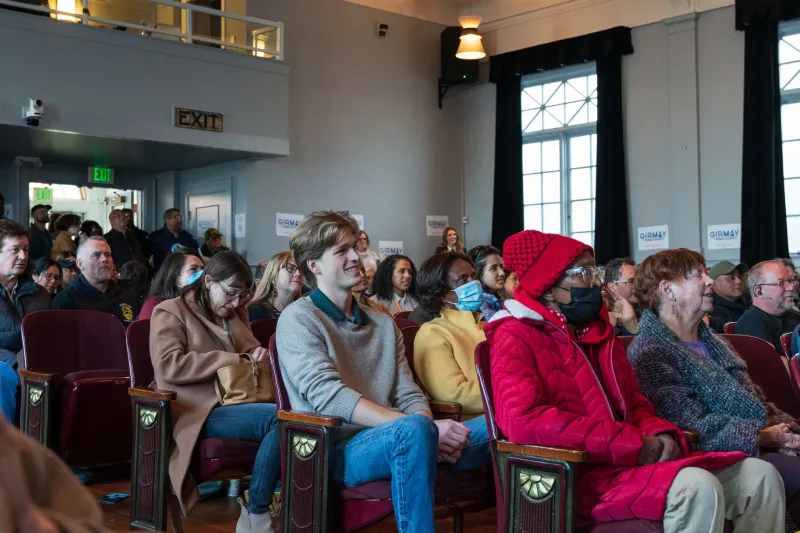
Let's be honest about what typically happens at a public hearing. A Tuesday evening meeting is scheduled in a government building. Notice is posted according to statutory requirements—perhaps a legal advertisement in a local newspaper, a sign on the affected property, a notice mailed to adjacent property owners. A handful of residents attend. Among them are representatives of organized neighborhood associations, a few vocal opponents of whatever is being proposed, and occasionally a developer's representative. The planner presents. Comments are taken. The record is closed.
The residents most likely to be affected by the decision—renters, working-class households, immigrants, young people, anyone without the flexibility to attend a weeknight meeting—are largely absent. Their absence is noted, if at all, as evidence of public support or public indifference. The hearing concludes, the box is checked, and the process moves forward having fulfilled its legal requirements while failing its democratic purpose.
This is not a peripheral dysfunction. It is a structural feature of how American planning practice has organized public participation for most of the past half-century, and it has consequences that extend far beyond any single project or decision.
The Anatomy of Participatory Failure
Research on public participation in planning has documented these patterns with considerable consistency. Studies examining who attends public meetings find persistent overrepresentation of homeowners, higher-income residents, and older adults relative to the populations of the communities being planned. The structural reasons are not difficult to identify: public hearings are scheduled at times that disadvantage working adults, held in locations that may be physically or psychologically inaccessible to many residents, conducted in formats that reward familiarity with bureaucratic procedure, and often announced through channels that reach only those already paying close attention to local government.
Beyond the demographic skew, there is what researchers have begun calling participatory planning fatigue—a cumulative disengagement that develops in communities that have been repeatedly subjected to participation processes that feel performative rather than genuinely influential. When residents invest time and emotional energy in a process and then observe that their input had no discernible effect on outcomes, they rationally conclude that future participation is not worth the cost. The communities that have experienced the most intensive planning interventions—often lower-income neighborhoods subject to successive rounds of redevelopment planning, urban renewal, or comprehensive plan updates—are frequently the most fatigued and the hardest to re-engage.
The result is a participation landscape that is structurally biased toward the status quo and toward the preferences of residents with the most resources to invest in civic engagement. For planners committed to equitable outcomes, this is not merely a procedural inconvenience. It is a fundamental challenge to the legitimacy of the decisions they are charged with making.
Tactical Urbanism as Participatory Tool
One of the more productive responses to this challenge has come from an unexpected direction: the tactical urbanism movement, which originated as a design practice but has evolved into a powerful vehicle for participatory engagement. By creating temporary, low-cost physical interventions—pop-up parks, painted crosswalks, temporary street closures, moveable furniture in underutilized public spaces—planners and community organizers can generate authentic engagement with built-environment questions in the places where residents already spend their time.
The participatory logic of tactical urbanism is straightforward: rather than asking residents to travel to a meeting room and comment on abstract plans, it brings the planning conversation to the street, the park, the vacant lot. Residents who would never attend a public hearing will stop to examine a temporary parklet, offer opinions on a prototype bike lane, or participate in a pop-up design workshop organized around a tangible physical experience. The feedback generated is often more specific, more emotionally grounded, and more representative of community sentiment than anything captured in a formal comment period.
Several cities have institutionalized tactical urbanism as a formal component of their participation toolkit. Detroit's planning department has used temporary interventions to test neighborhood design concepts in communities skeptical of top-down planning processes, building trust and generating usable feedback simultaneously. In Denver, pop-up engagement stations positioned in high-traffic public spaces during weekend events have reached demographic groups consistently underrepresented in conventional participation processes.
Digital Platforms and the Reach Problem
Digital participation platforms represent a second major frontier. Tools such as participatory mapping applications, online comment portals, and asynchronous video feedback systems can dramatically extend the reach of engagement efforts—allowing residents to participate on their own schedules, in their own languages, and from their own devices. For planning professionals, the appeal is obvious: the geographic and temporal constraints of in-person meetings simply do not apply to digital engagement.
The limitations, however, are equally important to acknowledge. Digital platforms tend to replicate rather than resolve the demographic skews of in-person engagement if deployed without deliberate attention to access and equity. Residents without reliable broadband access, those with limited digital literacy, and those whose primary languages are not supported by the platform will be systematically excluded. Planning departments that have implemented digital participation most successfully have paired online tools with intensive offline outreach—community liaisons, partnerships with trusted local organizations, and multilingual support—rather than treating digital platforms as a substitute for human engagement.
Boston's use of participatory budgeting platforms offers a useful reference point. By combining digital voting with in-person workshops in community centers, libraries, and schools, and by conducting targeted outreach through community health workers and neighborhood organizations, the city achieved participation rates and demographic diversity that neither channel could have produced independently.
Neighborhood Co-Design Labs: Shifting the Locus of Authority
Perhaps the most structurally ambitious response to participatory failure is the neighborhood co-design lab model, which relocates planning authority—not merely consultation—into community settings. Rather than presenting residents with plans developed by professionals and soliciting reactions, co-design labs bring planning professionals into ongoing, collaborative relationships with community members who share genuine decision-making power over the outcomes.
This model requires a different disposition from planning professionals. It asks practitioners to function less as technical authorities delivering expert recommendations and more as facilitators and translators—bringing professional knowledge and regulatory expertise into a collaborative process while genuinely ceding control over priorities and solutions. That is a difficult shift for a profession that has historically defined its value in terms of technical expertise, and it raises legitimate questions about accountability and the role of democratic institutions.
But the co-design lab model also produces outcomes with a qualitatively different relationship to the communities they affect. Plans developed through genuine co-design tend to reflect local knowledge that professional planners would not have access to through conventional processes, to have broader community investment in their implementation, and to generate less organized opposition—because the opposition has been incorporated into the design process rather than excluded from it.
A Professional Obligation
None of these approaches is a complete solution, and none eliminates the tensions inherent in democratic planning practice. Tactical urbanism can be superficial if not connected to binding decision processes. Digital platforms can entrench existing inequities if deployed carelessly. Co-design labs require institutional commitments of time and resources that many planning departments struggle to sustain.
What they share, however, is a willingness to treat the failure of conventional participation not as an acceptable limitation but as a problem demanding professional attention and creative response. Planning professionals who accept the status quo—who conduct their public hearings, check their boxes, and move on—are not merely missing an opportunity. They are actively reproducing a system that undermines the equity and legitimacy that planning practice claims as its foundational values.
The tools exist to do better. The research supports doing better. What remains is the professional will to make the case, within our own organizations and to the elected officials and administrators we serve, that genuine participation is not a procedural luxury but a prerequisite for planning that actually works.