Beyond the Blueprint: How Planners Are Rebuilding Public Trust in an Era of Organized Opposition
Photo: Dariushborbor, CC BY 4.0, via Wikimedia Commons
The Limits of Being Right
For much of the twentieth century, urban planners operated under a relatively stable professional compact. They conducted the studies, interpreted the data, and presented findings to elected officials and the public with a reasonable expectation that technical rigor would carry persuasive weight. That compact has eroded considerably.
Today, a well-researched housing needs assessment can be dismissed in a single city council meeting by a coalition of organized residents armed with talking points, legal challenges, and social media campaigns capable of reaching thousands overnight. The planner who spent six months building an evidence base may find that evidence treated as just one opinion among many—and not always the most influential one.
This is not simply a story about NIMBYism, though that phenomenon is central to it. It is a deeper reckoning with the professional identity of urban planners and the question of what legitimacy actually looks like when communities no longer defer automatically to credentialed expertise.
A Profession Caught in the Crossfire
The tension is particularly acute in mid-size and growing cities where development pressure is intensifying. Planners in metros like Raleigh, Boise, and Austin have described working environments in which every infill project, every upzone proposal, and every affordable housing application becomes a flashpoint. Opposition groups have grown more organized, more legally sophisticated, and more adept at procedural delay tactics than at any previous point in recent planning history.
What makes this dynamic especially challenging is that planners often find themselves caught between two forms of accountability. On one side, they answer to elected officials and institutional clients who expect professional recommendations grounded in technical analysis. On the other, they are increasingly expected to demonstrate democratic responsiveness to communities whose concerns may conflict directly with those recommendations.
When those two obligations collide in a public hearing room, the planner's credibility is frequently the first casualty.
The Trust Deficit Is Not New—But Its Consequences Are
Public skepticism toward government institutions and professional expertise is not a recent development. What has changed is the speed and scale at which that skepticism can be mobilized. A neighborhood association that once might have submitted written comments to a planning department can now launch a coordinated digital campaign within hours of a project announcement, complete with petition platforms, targeted social media advertising, and prepared testimony scripts for dozens of speakers.
Some planning directors have noted that the sophistication of opposition campaigns has actually outpaced the communication capacity of many municipal planning departments, which are often understaffed and poorly equipped for sustained public engagement beyond formal notice requirements.
The result is a credibility gap that technical excellence alone cannot close. Planners who rely primarily on data presentations and regulatory citations to make their case are discovering that this approach, however professionally sound, often fails to address the underlying anxieties driving community opposition.
Reframing the Role
A growing number of practitioners are responding by fundamentally rethinking what it means to be a trusted professional in this environment. Rather than positioning themselves as neutral arbiters of technical fact, these planners are embracing a more explicitly relational model of practice—one that prioritizes ongoing community engagement over episodic public hearings and treats relationship-building as a core professional competency rather than a supplementary communication task.
In Charlotte, North Carolina, a senior planner working on corridor densification initiatives began hosting informal neighborhood conversations well before any formal application was filed on a contested stretch of transit-adjacent land. Rather than presenting a finished plan for public comment, the team invited residents to help define the questions the plan should answer. The result was not universal support—it rarely is—but it produced a process in which opposition, when it emerged, was engaged rather than simply reactive.
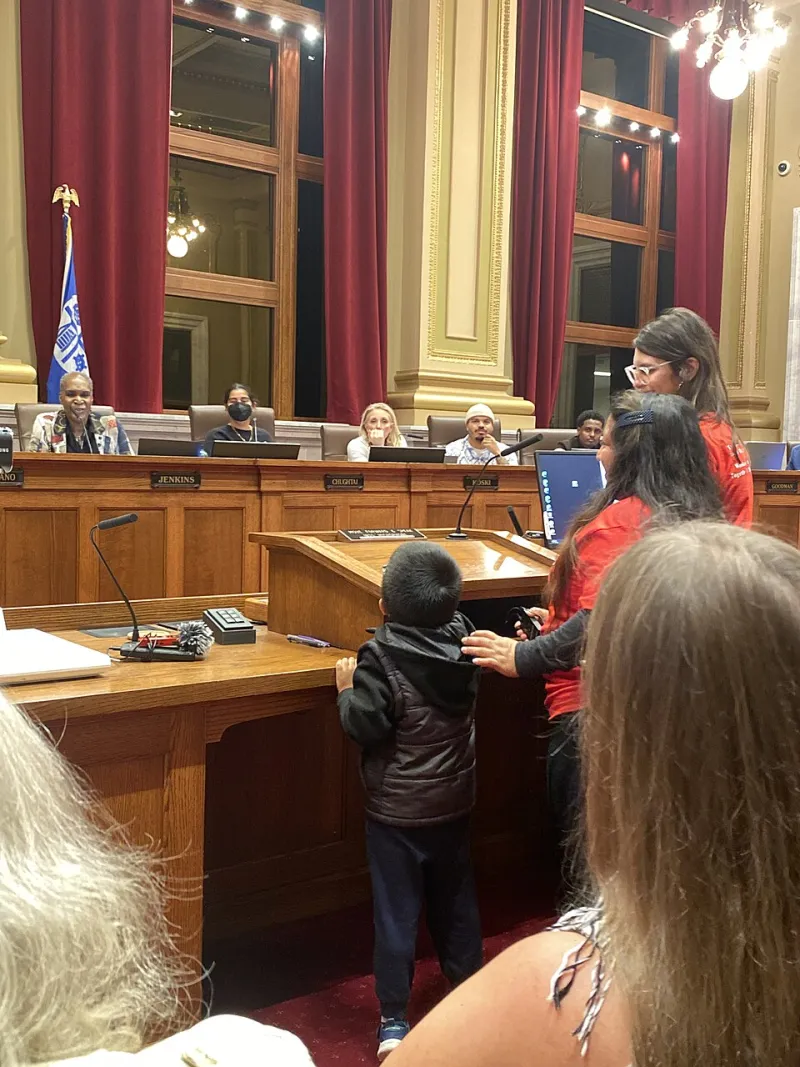
In Minneapolis, planning staff working on implementation of the city's landmark 2040 comprehensive plan developed a deliberate strategy of meeting with skeptical neighborhood organizations on their own terms, often at community centers and local businesses rather than city hall. Staff members were trained not only in the technical details of the plan but in active listening techniques and conflict de-escalation, recognizing that the first job in many of these conversations was to demonstrate genuine interest in community concerns before making any professional argument.
Credibility Is Earned Through Process, Not Position
What these approaches share is a recognition that professional credibility in contemporary planning practice is not conferred by credentials or institutional authority. It is built through demonstrated behavior over time—through showing up before a project is controversial, through acknowledging the legitimate concerns embedded in even the most obstructive opposition, and through being honest about the trade-offs that every planning decision involves.
This does not mean abandoning technical rigor or capitulating to every objection. Planners who have found ways to navigate organized opposition effectively are clear that professional integrity requires maintaining the substance of sound recommendations even under political pressure. What changes is not the content of the work but the posture with which it is presented and the relationships through which it is delivered.
Several practitioners have described a deliberate shift in how they introduce themselves in community settings—moving away from language that foregrounds institutional role and toward language that foregrounds shared investment in community outcomes. This is not a rhetorical trick. It reflects a genuine philosophical reorientation toward the planner as a member of the community they serve, not merely a service provider to it.
Structural Supports for a Different Kind of Practice
Individual practitioners cannot carry this shift alone. Planning departments and professional organizations have a role to play in creating the structural conditions that make relationship-centered practice possible.
That means investing in community liaison positions that maintain ongoing neighborhood relationships independent of specific project timelines. It means developing internal training programs that treat public engagement as a technical skill deserving the same professional development investment as GIS proficiency or zoning code interpretation. And it means advocating for workloads and staffing levels that allow planners to do more than respond reactively to applications and public hearing calendars.
Professional networks like this one have a particular responsibility to document and disseminate practices that are working—to ensure that planners in smaller or less-resourced departments have access to the accumulated wisdom of colleagues who have navigated similar challenges in other cities.
The Stakes of Getting This Right
The credibility of the planning profession is not merely a matter of professional pride. It has direct consequences for the quality of the built environment and the equitable distribution of opportunity across American cities. When planners lose the ability to advance technically sound recommendations in the public arena, the policy vacuum is often filled by the loudest and most organized voices—which are rarely those of the residents with the least political power.
Rebuilding professional authority in this environment is therefore not just a career challenge for individual planners. It is a civic obligation. The profession's capacity to serve as a trusted bridge between technical knowledge and democratic decision-making may be one of the more consequential questions facing American cities in the years ahead.