Shelf Life: Why America's Most Ambitious City Plans Rarely Survive Contact with Reality

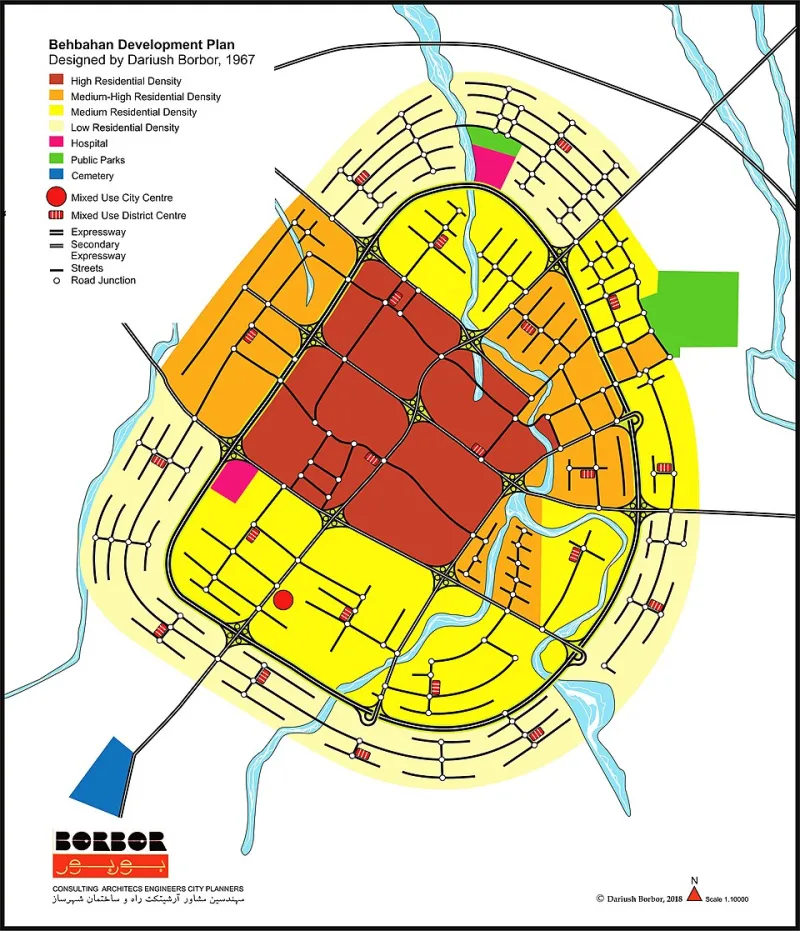
Photo: Mazor-First Architects & City Planners, CC BY-SA 4.0, via Wikimedia Commons
Somewhere in a municipal building in nearly every mid-size American city, there is a comprehensive plan that cost taxpayers several hundred thousand dollars to produce. It contains detailed land use maps, demographic projections, infrastructure priorities, and community-sourced vision statements. It was unveiled at a public meeting, covered by the local paper, and praised by the planning commission. And then, quietly, it stopped mattering.
This is not an isolated failure. It is a pattern so common that many seasoned planners have developed a kind of professional gallows humor about it. The question worth asking — seriously, without cynicism — is why. Why do cities invest significant resources in visionary planning documents that their own institutions are structurally ill-equipped to execute?
Understanding that question is not merely an academic exercise. It is, for American planners, one of the most consequential professional challenges of the current era.
The Ambition Trap
Comprehensive plans are designed to be ambitious. That ambition is, in one sense, their purpose. A twenty-year vision for a city should aspire to something beyond the immediately achievable. But ambition untethered from implementation architecture is not vision — it is aspiration, and aspiration without accountability mechanisms rarely survives the first budget cycle.
The problem begins in the planning process itself. Community engagement exercises, while essential, often generate wish lists rather than prioritized frameworks. Residents want safer streets, more parks, affordable housing, better transit, and thriving commercial corridors — all at once. Planners, trained to synthesize and honor that input, frequently produce documents that attempt to honor every expressed need rather than make the hard choices that implementation demands.
The result is a plan that is politically safe at the moment of adoption and practically unworkable in the years that follow. When everything is a priority, nothing is.
Leadership Turnover and Institutional Memory
American cities change leadership with remarkable frequency. Mayors serve two-to-four-year terms. City managers come and go. Planning directors — often appointed rather than elected — are particularly vulnerable to turnover following elections. A comprehensive plan adopted under one administration may be inherited by a successor who had no hand in crafting it and faces no formal obligation to advance it.
This is not simply a matter of political will, though that is a factor. It is also a matter of institutional memory. When the planning director who shepherded a ten-year vision departs, the contextual knowledge that animated that document — the informal agreements, the negotiated priorities, the community relationships — often leaves with them. What remains is a static document that new staff must interpret without the benefit of the conversations that shaped it.
Some cities have attempted to address this through succession planning and internal knowledge management systems. These efforts are valuable, but they address symptoms rather than causes. The deeper issue is that most comprehensive plans are not designed to transfer well across leadership transitions.
Budget Cycles Versus Planning Horizons
There is a fundamental temporal mismatch between how cities plan and how cities fund. A comprehensive plan operates on a ten-to-twenty-year horizon. Municipal budgets operate on a twelve-month cycle. Capital improvement programs typically extend five years at most. The result is that long-range planning priorities must continuously compete — and frequently lose — against immediate operational demands.
A neighborhood revitalization strategy that requires sustained investment over seven years will be reconsidered at each annual budget cycle, subject to shifting priorities, revenue fluctuations, and the competing claims of other departments. The plan may remain formally in effect, but its practical influence erodes with each passing fiscal year in which its priorities are deferred.
Federal and state funding structures compound this problem. Grant programs that could support plan implementation often require matching funds, rapid deployment timelines, or eligibility criteria that do not align neatly with locally adopted priorities. Planners find themselves chasing available dollars rather than directing resources toward planned outcomes — a dynamic that gradually inverts the relationship between planning and finance.
The Implementation Architecture Problem
Perhaps the most correctable failure in the comprehensive planning process is the absence of what might be called implementation architecture — the specific, accountable mechanisms by which a plan's aspirations are translated into municipal action.
Many comprehensive plans conclude with a matrix of action items assigned to departments and accompanied by vague timelines such as "ongoing" or "medium-term." These matrices function as placeholders rather than directives. They assign responsibility without authority, establish timelines without milestones, and create the appearance of accountability without its substance.
Contrast this with the approach taken by a small but growing number of cities that have restructured their planning documents around what practitioners sometimes call "decision triggers" — specific conditions under which particular actions must be initiated, reviewed, or revised. Rather than prescribing outcomes across a twenty-year horizon, these plans establish clear protocols for how the city will respond to measurable changes in population, infrastructure condition, market activity, or environmental indicators.
This adaptive approach does not sacrifice ambition. It reframes ambition in terms of responsiveness rather than prediction — acknowledging that a city in 2045 will face circumstances that cannot be fully anticipated in 2025, while ensuring that the planning framework remains a living instrument rather than a historical artifact.
Redesigning for Survivability
For planners seeking to close the gap between vision and execution, several practical reorientations are worth considering.
Prioritization as a professional obligation. The instinct to honor every community input is understandable and ethically grounded, but it must be balanced against the obligation to produce a workable strategy. Planners who facilitate genuine prioritization conversations — including difficult discussions about tradeoffs — serve their communities more honestly than those who defer hard choices to the political process.
Embedding plans in budget processes. A comprehensive plan that has no formal relationship to the capital improvement program or the annual budget process is advisory at best. Planners who work to institutionalize plan-to-budget linkages — through policy requirements, council resolutions, or executive commitments — give their work a structural foothold that survives individual leadership changes.
Shorter cycles, clearer accountability. Rather than a single ten-year document, some practitioners are advocating for layered planning frameworks that combine a long-range vision with medium-term implementation plans updated every three to five years. This structure allows the long-range vision to remain stable while the implementation layer adapts to changing conditions and new leadership priorities.
Cross-departmental ownership. A plan owned exclusively by the planning department is perpetually vulnerable. Plans that are genuinely co-owned by public works, economic development, housing, and parks departments — with formal accountability mechanisms across those agencies — are far more resistant to departmental silos and budget-driven neglect.
The Professional Stakes
The chronic gap between planning ambition and municipal execution carries costs that extend beyond any single city or document. It erodes public trust in the planning process, discourages community participation, and — perhaps most significantly — undermines the professional standing of planners within municipal power structures.
When plans do not translate into visible change, the implicit message is that planning is a consultative exercise rather than a governing function. Reversing that perception requires planners to take implementation seriously not as an afterthought but as the central measure of professional success.
The goal is not simply to write better plans. It is to build the institutional conditions under which good plans can actually govern.