Why the Wrong Projects Keep Winning: Dismantling the Institutional Barriers That Bury Good Planning Ideas
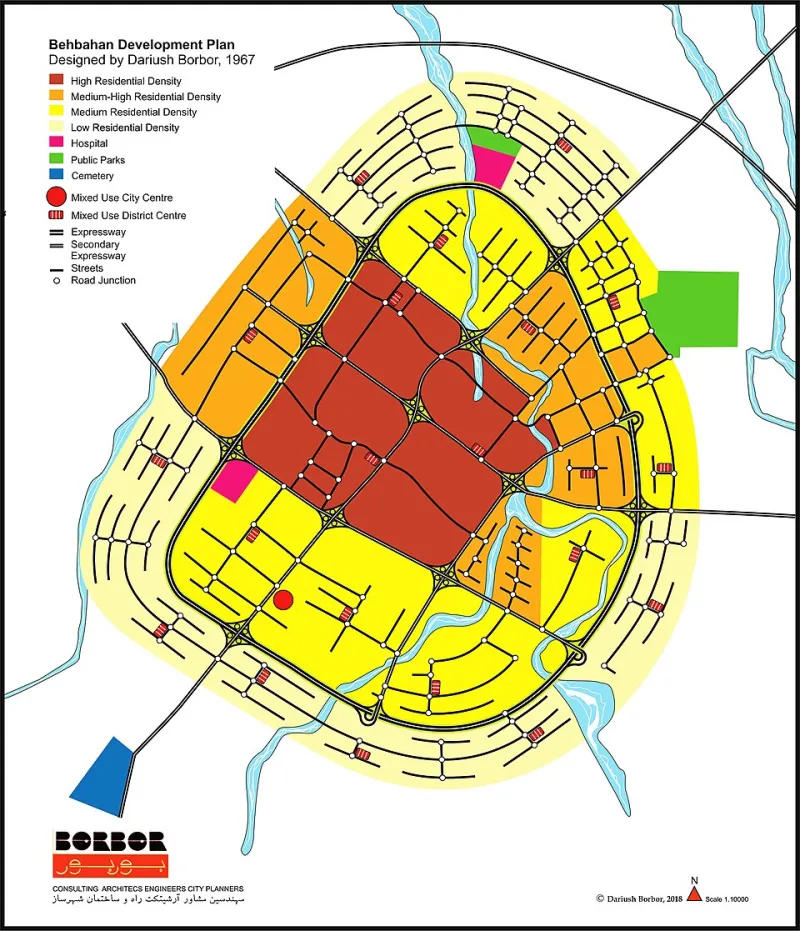
Photo: Dariushborbor, CC BY-SA 4.0, via Wikimedia Commons
In a mid-sized Midwestern city several years ago, a senior planner spent the better part of eighteen months assembling a corridor redevelopment strategy grounded in transit-oriented design principles, fiscal impact modeling, and a robust community engagement process that drew participation from more than four hundred residents. The proposal was thorough, defensible, and aligned with the city's own adopted comprehensive plan. It was also never formally presented to the city council. Meanwhile, a surface parking expansion adjacent to a struggling retail district—conceived in a series of informal conversations between a council member and a commercial real estate developer—cleared the approval process in under ninety days.
This kind of outcome is not an anomaly. Planners across the country recognize it immediately. The gap between the quality of an idea and its likelihood of reaching implementation is often determined less by the merits of the proposal than by the organizational, fiscal, and political conditions surrounding it.
The Architecture of Institutional Inertia
To understand why strong planning ideas stall, it helps to examine the structural conditions that shape how proposals move—or fail to move—through municipal systems.
Budget cycles are among the most underappreciated obstacles. Planning departments in most American cities operate on annual appropriations that reward visible, near-term deliverables. Long-range initiatives that require multi-year investment in analysis, stakeholder alignment, and iterative refinement rarely fit neatly into fiscal calendars designed for maintenance contracts and permit processing. When department directors are asked to justify expenditures during budget reviews, a completed parking lot is far easier to point to than a corridor study awaiting political momentum.
Electoral timing compounds this problem. Elected officials routinely operate on two- and four-year cycles that create powerful incentives to advance projects that can be announced, photographed, and attributed before the next campaign season. A transit-supportive mixed-use development that requires rezoning, environmental review, and phased infrastructure investment may not produce a ribbon-cutting for six or seven years—long after the official who championed it has moved on. By contrast, a fast-tracked commercial project that breaks ground within a single term generates the kind of tangible evidence of progress that sustains political careers.
Organizational fragmentation adds a third layer of dysfunction. In many municipalities, planning, public works, economic development, and housing operate as discrete silos with separate reporting structures, funding streams, and performance metrics. A proposal that requires genuine coordination across these divisions faces compounding approval thresholds. Each department introduces its own review timeline, risk calculus, and jurisdictional concern. The cumulative friction is often enough to exhaust even the most persistent advocates.
When the Process Becomes the Product
Perhaps the most corrosive dynamic is what might be called process substitution—the tendency of institutions to treat procedural compliance as a proxy for substantive progress. A planning department that has completed a study, held public hearings, and produced a polished report can, in a narrow bureaucratic sense, claim that it has addressed a problem. Whether the resulting recommendations are ever acted upon becomes a secondary concern.
This dynamic creates perverse incentives. Planners who invest in rigorous, multidisciplinary work often find themselves rewarded with acknowledgment but not action. Those who learn to work within the informal networks that actually govern project advancement—who cultivate relationships with budget officers, communicate in the language of political optics, and frame proposals around short-term deliverables—tend to see their work move forward.
The lesson, uncomfortable as it is, is that technical excellence alone does not constitute a viable implementation strategy.
Breaking the Pattern: A Framework for Advancing Better Ideas
Recognizing the problem is necessary but insufficient. What follows is a practical framework that planning professionals have used to improve the odds that substantive proposals reach implementation.
Translate merit into political legibility. Strong ideas that cannot be communicated in terms decision-makers care about will not survive contact with municipal politics. This does not mean abandoning rigor—it means developing a parallel communication strategy that connects technical findings to the outcomes elected officials are accountable for: job creation, tax base growth, public safety, and constituent satisfaction. Planners who invest in this translation work consistently report better traction.
Identify and cultivate internal champions. In virtually every documented case where an innovative planning proposal successfully navigated institutional resistance, at least one individual with positional authority—a department director, a chief of staff, a budget officer—had been engaged early and converted into an active advocate. Planners should map the internal political landscape as carefully as they map land use patterns.
Disaggregate the proposal. Large, comprehensive initiatives are inherently vulnerable to delay because they present multiple points of potential resistance. Breaking a proposal into discrete, sequenced components—each with its own deliverable, timeline, and approval pathway—reduces the surface area available for obstruction. Early components can build momentum and demonstrate feasibility for subsequent phases.
Attach proposals to existing fiscal vehicles. Ideas that arrive with their own funding rationale are significantly easier to advance than those that require new appropriations. Planners who identify alignment with federal grant programs, tax increment financing districts, or capital improvement plan cycles give their proposals a structural advantage that purely conceptual work lacks.
Build external pressure strategically. Municipal institutions are not hermetically sealed from outside influence. Regional planning organizations, university research partnerships, business improvement districts, and civic advocacy groups can all create external demand for proposals that have stalled internally. Planners who understand how to activate these networks without appearing to circumvent internal processes can create conditions in which advancement becomes the path of least institutional resistance.
Reclaiming the Profession's Influence
There is a broader professional stake in solving this problem. When inferior projects consistently outpace evidence-based alternatives, the cumulative effect on cities is measurable: inefficient land use patterns, missed economic development opportunities, infrastructure investments that generate long-term fiscal liability, and communities that bear the cost of decisions made for reasons of convenience rather than quality.
There is also a reputational cost to the planning profession itself. When planners are perceived as producers of unimplemented reports rather than drivers of consequential outcomes, their influence in the municipal power structure erodes further—creating the conditions for even more projects to bypass meaningful planning review.
The professionals who are most effectively addressing this challenge share a common orientation. They have stopped treating implementation as someone else's responsibility and started treating it as a core competency of planning practice. They invest as much in understanding organizational dynamics as they do in technical analysis. And they approach the gap between good ideas and implemented projects not as an inevitable feature of public sector work, but as a solvable design problem.
The planning profession has never lacked for compelling ideas. What it has sometimes lacked is the institutional fluency to see them through. Developing that fluency—and sharing it across the professional community—is work that belongs at the center of how planners practice, collaborate, and define success.