Hired Hands, Borrowed Vision: How Planning Directors Can Take Back the Strategic Center

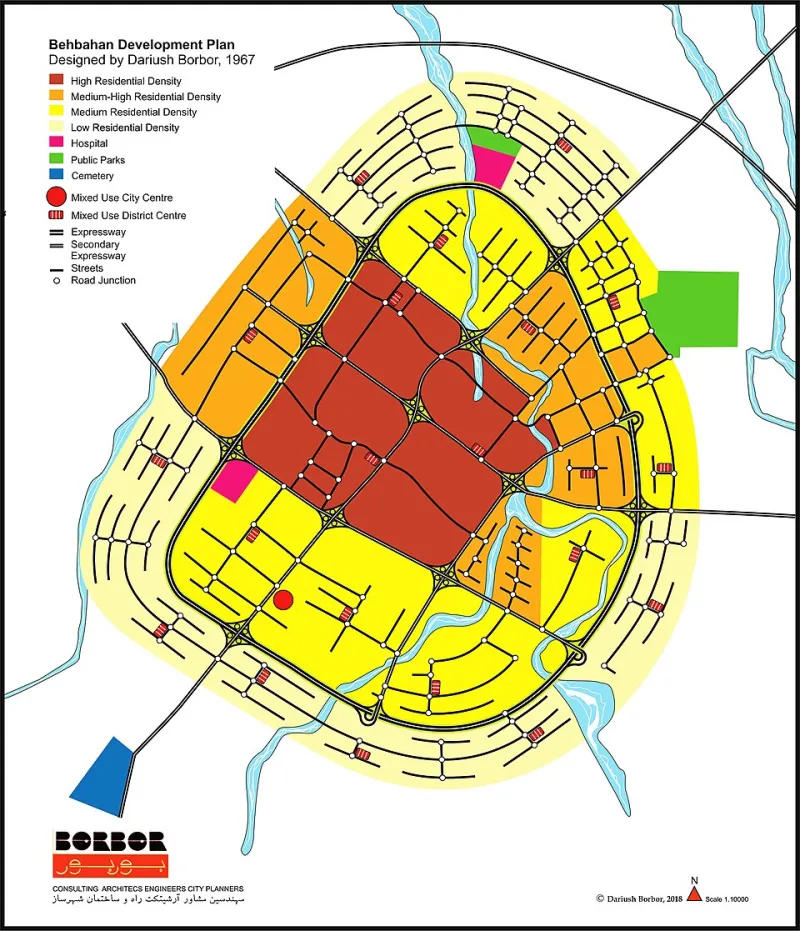
Photo: Ministry of Housing and Urban Affairs, GODL-India, via Wikimedia Commons
When the Experts Become the Decision-Makers
There is a quiet displacement occurring inside American planning departments, and it rarely announces itself with any drama. It happens incrementally: a consultant is brought in to facilitate a comprehensive plan update, another is retained to model transit scenarios, a third is hired to lead community engagement. Before long, the external advisors are the ones framing the questions, curating the data, and presenting findings to elected officials—while the municipal planners who will ultimately be responsible for implementation sit two rows back in the room.
This is not a critique of consulting expertise. Specialized knowledge has a legitimate and often essential role in complex planning processes. The problem arises when the accumulation of that expertise quietly relocates strategic authority away from the institution that holds democratic accountability for a city's future. When consultants control the narrative, in-house planners lose more than influence. They lose the professional standing that makes sustained, coherent city-building possible.
For planning directors across the country, this erosion of institutional authority has become one of the more urgent—and underacknowledged—challenges of the current moment.
How the Shift Happens
Understanding the pattern requires some candor about why municipalities reach for outside help so readily. Planning departments are chronically understaffed relative to the scope of work they are expected to manage. Elected officials and city managers often perceive external firms as carrying a credibility that internal staff, for political or bureaucratic reasons, cannot easily project. And in a profession where specialized technical skills—economic modeling, environmental impact analysis, transportation demand forecasting—are increasingly essential, no single department can reasonably house all of them.
These are real constraints, and they create genuine openings for consulting firms. The difficulty emerges when those openings expand beyond technical support into the territory of vision and strategy. A firm retained to conduct a housing needs assessment may find itself, by the second or third engagement, effectively setting the policy framework that governs how the city responds to that need. A transportation consultant hired to evaluate corridor alternatives may be the one presenting recommendations to city council, with department staff absent from the conversation or relegated to a supporting role.
The result is a structural inversion. The consultants—who will move on to the next contract—are shaping the city's direction. The planners—who will live with the consequences—are processing the paperwork.
The Credibility Gap and How It Widens
One reason this dynamic persists is that it often feels, in the short term, like a solution rather than a problem. Consulting firms bring polished deliverables, national benchmarking data, and presentation styles calibrated to impress elected officials. They are skilled at translating complexity into digestible narratives. Municipal planners, by contrast, are frequently constrained by institutional culture, risk aversion, and the accumulated weight of prior decisions that consultants are free to set aside.
Over time, however, this arrangement corrodes departmental capacity. When external firms lead the strategic work, internal staff have fewer opportunities to develop and demonstrate the analytical and communicative skills that build institutional credibility. The department becomes less capable of operating independently—which creates further justification for hiring consultants. The cycle is self-reinforcing.
There is also a knowledge continuity problem. Consulting firms take their institutional memory with them when the contract ends. Cities that outsource their planning intelligence too broadly find themselves dependent on successive rounds of external engagement simply to maintain continuity on their own initiatives.
Reclaiming the Strategic Center
None of this argues for eliminating outside expertise. It argues for restructuring the relationship so that municipal planners are unambiguously in the role of client, architect, and author—not coordinator or audience.
Several concrete approaches have proven effective for planning directors willing to reorient these dynamics.
Define the intellectual frame before the contract is signed. The most consequential moment in any consulting engagement is not the final presentation—it is the scope of work. Planning directors who invest serious time in crafting precise, strategically informed scopes are far better positioned to ensure that consultants answer the questions the department has chosen, rather than the questions the firm finds most comfortable to ask. Vague scopes invite scope expansion. Precise scopes preserve authority.
Keep the synthesis function internal. Consultants can generate analysis. The interpretation of that analysis—what it means for this city, given its particular history, politics, and community commitments—should remain the work of departmental staff. When planning directors allow consultants to present findings directly to elected officials without an intervening layer of institutional interpretation, they cede the most strategically significant part of the process.
Build the department's external visibility. Much of the credibility advantage that consulting firms enjoy is a function of presentation and access, not substantive knowledge. Planning directors who invest in developing their own public presence—publishing in professional outlets, presenting at national conferences, engaging meaningfully with peer networks—gradually shift the perception of their department from administrative function to strategic resource. The Planning Network and comparable professional organizations exist, in part, to support exactly this kind of visibility-building.
Treat consultant deliverables as inputs, not outputs. This is a cultural shift as much as a procedural one. Departments that receive a consultant's report and immediately transmit it upward to leadership are implicitly endorsing the framing that the consultant chose. Departments that treat the report as raw material—to be interrogated, supplemented, and recontextualized before it moves forward—are exercising the kind of professional judgment that builds long-term institutional authority.
Invest in internal technical capacity selectively. It is not realistic to eliminate the need for outside expertise. But planning directors who identify two or three technical domains of particular strategic importance to their city and invest deliberately in developing internal expertise in those areas create a meaningful counterweight to consultant dependency. In cities where housing affordability is the defining challenge, for instance, having an in-house economist or financial analyst changes the nature of every external engagement on that topic.
The Longer Stakes
The question of who controls the planning narrative is not merely a professional turf issue. It has direct consequences for the quality and continuity of urban governance. Cities that develop strong, strategically capable planning departments make better decisions over time—not because they reject outside knowledge, but because they have the institutional depth to use it well.
For the profession to fulfill its public purpose, planners must be more than skilled administrators of externally generated frameworks. They must be the people who hold the long view: who understand the community's history, who can read the political landscape without being captured by it, and who are willing to defend a coherent vision across budget cycles and election results.
Reclaiming that role will require planning directors to be deliberate about how they structure outside engagements, how they develop their own staff, and how they position their departments in the broader municipal power structure. It will also require a willingness to name the displacement when it is occurring—and to push back.
The consultants are good at what they do. But they are not accountable for what happens after they leave. That accountability belongs to the department. And with accountability must come authority.